Executive Global
®
Productivity | Strategy | Profitability
This has been a difficult year for anyone who watches prices rather than balance sheets. Gold set a record above $5,500 an ounce in January and then surrendered nearly a third of that value. Silver, having peaked above $120, was cut roughly in half. The mining complex made all-time highs in February and gave back 35%.
If price were information, you would conclude that the monetary debasement thesis had been discredited. You would conclude that the world had lost interest in hard assets. The financial press obliged, running the predictable headlines about gold’s collapse, the death of the inflation trade, the triumphant return of paper.
NOW EXAMINE THE LEDGER
The People’s Bank of China has added gold every single month for more than a year and a half — its longest documented accumulation streak on record — lifting official holdings past 75 million troy ounces, some 2,346 tons. And here is the detail that should stop you cold: Beijing’s largest monthly purchase in more than two years came during the worst month for bullion since 2008. The dollar value of China’s hoard fell by roughly $37 billion that month even as the tonnage rose. They did not care. They are not trading. They are accumulating, and a falling price simply lowers their cost per ounce.
Let that sink in. The largest buyer on the planet accelerated its purchases when prices crashed. That is not a vote of no confidence in gold. That is a vote of no confidence in what gold is priced in.
Nor is China alone in ignoring the tape. The European Central Bank reports that gold now constitutes roughly 27% of global central bank reserve assets, up from 20% a year earlier, while the U.S. Treasury share has slipped to about 22%. Read that again. For the first time since 1996, the world’s monetary authorities hold more gold than they hold American government debt. In a survey of seventy-six central banks this year, 89% expected global gold reserves to rise and 74% expected their dollar holdings to shrink over five years.
Seventy-four percent of the world’s central banks are actively planning to reduce their exposure to U.S. Treasuries. The bond market does not know this yet. It will.
Then there is the development dismissed as a crypto curiosity that ought to be studied in every economics department in the country. Tether — a stablecoin issuer — now holds well over a hundred tons of independently attested physical gold, ranking among the thirty largest holders on earth, ahead of the central banks of Greece, Qatar, and Australia. Across six quarters it accumulated roughly 73 tons against China’s 49. A private company sitting atop a mountain of Treasury bills examined its own collateral and concluded it needed something that cannot be conjured into existence.
And this summer, China’s largest banks terminated retail leveraged paper gold trading tied to the Shanghai Gold Exchange, giving clients three options: close, liquidate, or take delivery. Let me be precise, because the headlines were not: this was not a ban on gold. Physical purchases, accumulation plans, exchange-traded funds, and institutional settlement all continue untouched. What was extinguished was the paper. Hong Kong, meanwhile, launched a trial clearing system for physical bullion. Beijing is migrating its citizens away from synthetic exposure and toward metal that can be weighed.
So. Price says gold is finished. The ledger says the largest, most price-insensitive, most strategically motivated buyers on the planet are treating the decline as an invitation.
Which of those two would you rather own?
THE ARITHMETIC THAT GOVERNS EVERYTHING
I want to slow down here, because this is where most commentary goes wrong. Analysts discuss the Fed, the dollar, the yield curve — and they do so in isolation, as if each variable exists in a vacuum. It does not. Every variable in global finance today is a downstream consequence of one foundational fact.
The national debt of the United States now stands at $40 trillion and is expanding by roughly $2 trillion a year. The average interest rate on marketable Treasury debt has risen to roughly 3.4% from about 1.5% five years ago, and it will keep climbing as low-coupon paper matures into today’s yields. Annual interest costs have surpassed $1.2 trillion — more than the entire national defense budget.
This is not a problem to be solved. It is a constraint to be obeyed.
WARSH IS SERIOUS. ARITHMETIC IS NOT IMPRESSED.
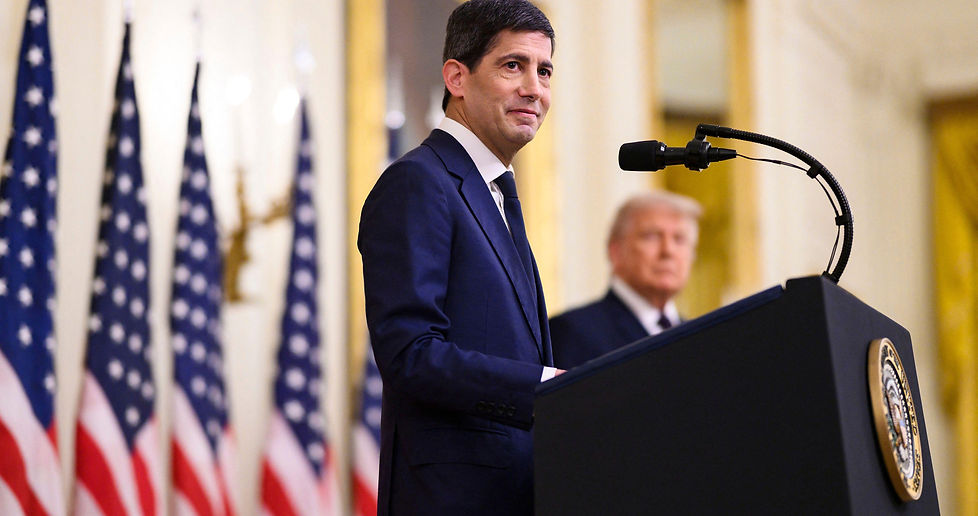
Chairman Kevin Warsh has done precisely what a serious man would do. He has shortened the post-meeting statement to a fraction of its former length, abolished forward guidance, declined to submit his own projections, and told Congress plainly that this committee has no tolerance for persistently elevated inflation. He is, by temperament and training, the most credible occupant of that chair in a generation.
But he is also trapped.
The evidence arrived within weeks of his confirmation. At his very first meeting as Chairman, the Fed announced it would buy $10 billion per month of Treasuries to keep bank reserves ample. Call it plumbing if that comforts you. I call it what it is: the balance sheet is expanding again — under a hawk, in an economy the Fed insists is solid. Broad money crossed $23 trillion for the first time in history this year. The rhetoric is hawkish. The balance sheet is not.
This is the manipulation hiding in plain sight. The Fed tells you one thing through its language. The ledger tells you something entirely different. Which one moves markets? The language, in the short run. The ledger, always, in the end.
THE BOND MARKET IS WHERE THIS ENDS
The sovereign debt crisis is not a forecast. It is underway, and it began abroad — which is how these things always begin, before the chickens eventually find their way home. Japan’s forty-year bond has broken above 4% for the first time since the tenor was introduced in 2007, against a debt load exceeding 250% of GDP. In Britain, 5% on the thirty-year gilt has gone from a ceiling that held for two decades to something closer to a floor, while the Bank of England has run its holdings from a pandemic peak near £900 billion toward £500 billion. Supply is rising everywhere. The buyer of last resort is retreating everywhere.
This is Triffin’s dilemma arriving precisely on schedule. The issuer of the reserve currency must run perpetual deficits to supply the world with liquidity, and those very deficits eventually destroy confidence in what is supplied. The dollar’s share of global reserves has fallen to roughly 58% from about 71% at the turn of the century. Nothing has replaced it. Something is quietly displacing it, one ton at a time.
Layered atop this is an energy shock the market keeps trying to declare over. The Strait of Hormuz carries close to a fifth of the world’s seaborne oil and has been closed or contested for most of this year. When Saudi Arabia rerouted its exports overland to the Red Sea to bypass the strait, that corridor came under attack as well. Brent has traveled from the $60s to above $110 within a single year. A world with two contested chokepoints does not have a temporary problem. It has a new baseline.
Supply-shock inflation cannot be cured by interest rates. It can only be endured — or monetised. The Fed knows this. It simply cannot say it.
THE REST OF THE MISDIRECTION
The S&P 500 has spent this year near record highs with a cyclically adjusted price-to-earnings ratio around 42 — a level reached only at the peak of the dot-com mania — and market capitalisation near 237% of GDP. If price were information, you would conclude that American corporate earnings power had never been stronger. You would conclude the economy was in exceptional health.
Now examine the ledger.
Only about 4% of S&P 500 constituents sit at their own highs — almost precisely the 2000 reading. Roughly 85% of stocks are underperforming the index itself. The index is not the market. The index is seven companies wearing a market as a costume, and the costume is convincing enough that most investors never look underneath it.
Beneath it, credit is fraying while spreads sit near historic tights. Consumer delinquencies are the worst since 2008. Automobile repossessions run at levels last seen in 2009. Payment-in-kind arrangements now appear in roughly 12% of private credit loans — borrowers paying lenders in promises rather than cash. That is what a dying credit cycle looks like before the mainstream media recognises one.
POSITIONING
The gold miners are generating record free cash flow. All-in sustaining costs sit near $1,600 an ounce. Margins exceed $2,500. Free-cash-flow yields are at record highs. Forward multiples sit at five-year lows — after a deep drawdown in share price with no deterioration whatsoever in the underlying businesses. That is not a broken thesis. That is a market handing you a discount because it mistook a price chart for a fact. EG