Executive Global
®
Productivity | Strategy | Profitability
Why 2026 May Be the Country’s Most Strategic Moment In Years.
For years, Panama has been marketed abroad with the usual tropical clichés: retirement, sunshine, beaches and tax-friendly structures. That framing is far too small for what the country actually is. Panama matters because it sits at the intersection of trade, mobility, logistics, finance and residency strategy. In 2026, that matters more than ever. As the world becomes more fractured, more expensive and less predictable, Panama’s value proposition looks less like lifestyle marketing and more like geopolitical common sense. The country offers a US-dollar economy, a business platform built around the Canal, one of the hemisphere’s most important logistics ecosystems, and a set of residency pathways that appeal to globally mobile investors and families.
That is why Panama deserves a fresh look, not as a fantasy, but as a serious base for business, travel, investment and long-term optionality.
A PLAN B FOR PEOPLE WHO THINK STRATEGICALLY
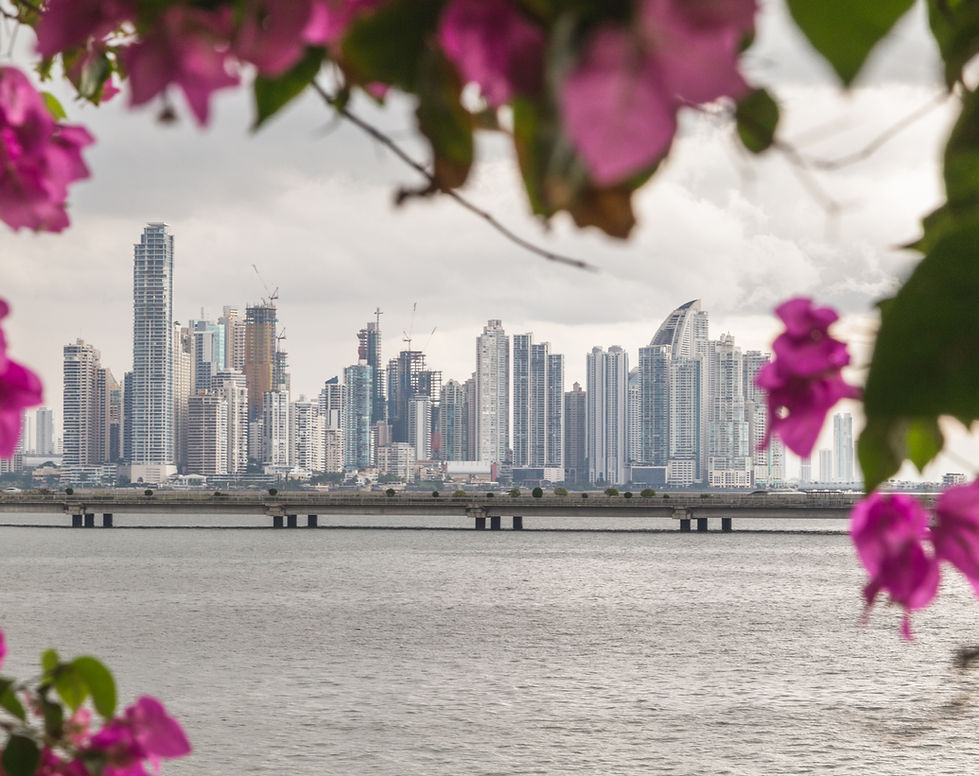
The strongest case for relocating to Panama is not climate. It is flexibility. Panama gives residents access to a dollarised economy, strong air connectivity, a regional business hub in Panama City, and a geography that compresses very different lifestyles into one compact jurisdiction. Within a relatively short distance, residents can move between high-rise urban living, Pacific beach communities, cooler mountain towns such as Boquete, Caribbean islands and historic city districts. The official tourism platform continues to market precisely that mix of beaches, nature and culture because it is real, not invented.
For entrepreneurs, investors and internationally minded families, the attraction is practical: Panama allows you to build a second base in a country that is commercially legible, internationally connected and relatively easy to understand compared with much of the region. It is not a place to disappear. It is a place to position.
WHAT BUSINESSES ARE MOST LIKELY TO THRIVE?
Panama works best when a business uses the country for what Panama is naturally built to do. That means the strongest opportunities tend to sit in sectors such as logistics, warehousing, regional distribution, re-export trade, shipping support, business services, corporate structuring, legal and compliance services, relocation support, hospitality, selected real estate niches and cross-border advisory work. Panama Pacifico, for example, explicitly promotes itself as a mixed ecosystem for companies, talent and infrastructure, highlighting tax incentives, legal benefits, on-site government management and a strategic location close to Panama City and key logistics links.
The lesson for international businesses is straightforward. Panama is not especially compelling as a random jurisdiction in which to incorporate a business with no regional strategy. It is compelling when the business model depends on movement, intermediation, trade access, Latin American reach or international clientele.
TOURISM IS NOT A SIDE STORY, IT IS PART OF THE ECONOMIC CASE
Panama’s tourism numbers also point in the right direction. According to Panama’s Tourism Authority, in the first two months of 2026 the country recorded a 15.0% increase in international visitor arrivals compared with the same period of 2025, while tourism income reached $1.3012 billion USD, up 15.4% year on year. Hotel occupancy during that period was estimated at 70.6%.
Those figures matter beyond hotels. Rising visitor numbers support aviation, restaurants, premium rentals, destination services, transport, hospitality staffing and tourism-linked real estate. They also reinforce Panama’s appeal as a place where people can combine a business trip, an exploratory due-diligence visit and a genuine holiday in the same week.
That makes Panama unusually useful for prospective residents and investors. A visit here is not just recreational; it is investigative. You can assess neighbourhoods, meet service providers, test whether city life suits you and understand how Panama actually functions before making any larger commitment.
COLON FREE ZONE MATTERS MORE THAN MANY REALISE
No serious discussion of Panama’s economy is complete without the Colon Free Zone. The zone describes itself as the second-largest free zone in the world and one of the most important multimodal distribution centres globally, with strategic access to major Atlantic cargo ports and markets across Central America, the Caribbean and the Andean region. That is not just branding language. It reflects Panama’s enduring role as a node in the wider circulation of goods. For companies dealing in regional distribution, wholesale movement, re-export trade, sourcing or inventory positioning, the Colon Free Zone remains one of the country’s most significant structural assets. It is one reason Panama should be read not merely as a residency jurisdiction, but as a commercial platform.
THE RESIDENCY CONVERSATION IN 2026
Panama’s best-known migration routes continue to appeal in 2026, but the serious routes are now clearly separated from the casual ones. The headline programme for higher-net-worth investors remains the Qualified Investor route. In practice, this has become one of Panama’s most strategically important residency products, and momentum has clearly accelerated: the Ministry of Commerce and Industries said in April 2026 that the programme had already surpassed 700 approved investors and generated more than $350 million USD in investment. The same official material confirms that the real-estate option is available from $300,000 USD, while the securities route begins at $500,000 USD and the fixed-term deposit route at $750,000 USD.
That matters because Panama is still one of the few jurisdictions where a clearly structured $300,000 USD real-estate investment can sit at the centre of a broader residency, asset-diversification and mobility strategy. In late 2025, Panama went a step further when Law 493 of 2025 authorised a special passport for Qualified Investors with permanent residence in Panama, what many in the market now refer to as the country’s “Golden Travel Passport”. The law was enacted in October 2025, marking a significant political endorsement of the investor-residency framework.
The Friendly Nations route still exists, but it is no longer the soft entry point it once was. Executive Decree 197 reframed it as a category requiring a minimum investment of $200,000 USD either in real estate or via the fixed-term deposit route. In other words, Panama now expects a more substantive basis for residence than simply liking the idea of living there.
For retirees, the Pensionado route remains one of Panama’s strongest lifestyle-residency options. The National Migration Service continues to recognise it as an indefinite category tied to a qualifying pension, and the official guidance still reflects the familiar minimum threshold of $1,000 USD per month.
RESIDENCY IS ONE THING. CITIZENSHIP IS ANOTHER
This distinction matters, and it is often blurred in sales material. Panama can be a very attractive place to secure residence. Citizenship is a different legal conversation. Under Article 10 of the Constitution, foreigners may apply for naturalisation after five consecutive years of residence, provided they meet additional requirements such as Spanish language ability and basic knowledge of Panamanian geography, history and political organisation. There is also a shorter three-year path for certain applicants, including those with a Panamanian spouse or Panamanian-born children.
That makes Panama appealing, but not casual. Residency should be viewed as the first legal layer. Citizenship, where appropriate, comes later and requires planning, continuity and compliance.
AND THEN THERE IS THE CANAL
Panama’s strategic case in 2026 is also being sharpened by events far beyond Central America.
Recent reporting has shown how instability around Iran and the effective disruption of the Strait of Hormuz has pushed additional traffic and pricing pressure toward the Panama Canal. The Independent reported that businesses were paying up to US $4 million USD to navigate the Canal in certain cases, while you can observe a significant rise in transit demand, tonnage and auction-slot prices, with some vessels paying more than $1 million USD for last-minute crossings and auction prices rising roughly 180% between March and April.
The point is not that Panama substitutes perfectly for the Middle East. It does not. The point is that when the world’s shipping routes come under pressure, Panama’s relevance rises. The Canal becomes not just an engineering marvel, but a pricing instrument, a geopolitical fallback and a reminder that chokepoints create winners as well as losers. For Panama, that may translate into more than revenue. It reinforces the country’s image as a jurisdiction whose economy is tied to global necessity, not passing fashion.
WHY PANAMA STILL DESERVES A SERIOUS LOOK
Panama is not for everyone. It does not solve weak planning, bad advice or vague ambitions. But for the right person, investor, entrepreneur, retiree, internationally mobile family or regional operator, it offers something increasingly rare: strategic usefulness.
You can live well there. You can travel easily from there. You can structure assets there. You can build a region-facing business there. You can pursue residency there. And in a world where supply chains, politics and tax systems are all becoming less predictable, that combination is not a luxury. It is leverage.
That is the real Panama story in 2026. Not paradise. Platform. EG